AI Writer·August 30, 2026·7 min read·AI-generated

MacRumors
news
Top Stories: Apple's 'Surprise and Shine' Event, Plus New Mac mini and Mac Studio
“Published August 29, 2026; the roundup connects Apple’s September 9 event, expected device updates and AI-performance claims to the immediate pre-transition news cycle.”
Yahoo Finance
news
Everything you need to know about new Apple CEO John Ternus
“Published August 29, 2026; the profile frames Ternus’s mandate around AI upheaval, Siri and the search for an eventual iPhone successor.”
PCMag via Yahoo Finance
news
After 15 Years, the Tim Cook Era at Apple Ends This Week
“Published August 29, 2026; the article confirms Cook’s September 1 CEO exit, Ternus’s hardware background, Cook’s executive-chairman role and near-term product and cost pressures.”
CEO handoff
John Ternus is set to become Apple CEO on September 1, with Tim Cook moving to executive chairman.
AI mandate
Ternus’s first major test is whether Apple can turn its silicon and device integration into compelling AI features.
Investor pressure
Markets are expected to judge the transition through the iPhone cycle, AI execution, services growth and Apple’s valuation.
Apple’s planned leadership handoff on September 1 puts hardware chief John Ternus in charge of one of the world’s most financially powerful companies at a pressured moment. Investors want Apple to show that its disciplined product machine can become an AI-era growth engine, not just a premium device franchise defending mature markets.23
Ternus’s elevation, with Tim Cook moving to executive chairman, signals continuity in Apple’s operating model but a meaningful shift in emphasis. Cook’s Apple was defined by supply-chain mastery, margin discipline, services expansion and scale. Ternus inherits that foundation. His mandate is likely to be judged by whether Apple can make hardware, silicon and software feel newly indispensable as generative AI changes expectations for phones, computers, wearables and personal assistants.36
The timing is unusually compressed. Apple is expected to hold a September 9 product event days after the CEO transition, with investors and consumers focused on new device categories, Mac updates and AI-performance claims.1 That gives Ternus little runway before the market begins reading Apple’s fall product cycle as the first signal of his leadership priorities.
The central question for Apple is not whether Ternus understands the company’s product engine. It is whether a hardware-led CEO can turn that engine into a more convincing AI strategy. Apple has spent years emphasizing integrated design, custom chips and on-device processing. That approach could become more valuable as consumers and regulators scrutinize privacy, latency and the cost of cloud-based AI systems.6
The argument is compelling in theory. If Apple can run more AI functions directly on iPhones, Macs, iPads and wearables, it can differentiate through privacy, battery efficiency and seamless performance. Its custom silicon gives it a credible technical base, especially if new chip generations can support more advanced AI features without forcing users into cloud-dependent experiences.6
The risk is that Apple’s AI story remains more architectural than experiential. Investors are not just looking for faster chips or better neural engines. They want features that change upgrade behavior, increase services attachment and restore confidence that Apple can define the next major computing interface. Ternus’s first year will hinge less on whether Apple can describe an AI roadmap than on whether customers can feel it across Siri, iPhone, Mac and emerging devices.25
Ternus takes over with the iPhone still central to Apple’s earnings power and strategic leverage. That is both an advantage and a constraint. The iPhone remains Apple’s most important platform for distributing new capabilities, but the annual upgrade cycle is under pressure in mature markets where hardware improvements often feel incremental.4
That makes the next phase of iPhone strategy especially important. If AI features become a practical reason to upgrade — through better personal assistance, image and video tools, health insights, productivity functions or device-to-device intelligence — Apple can defend the premium iPhone model. If they do not, the company may face more questions about whether annual hardware refreshes can keep carrying investor expectations.45
The September product cycle could also test Apple’s appetite for form-factor change. MacRumors’ August 29 roundup tied the immediate pre-transition news cycle to expectations for a September 9 event, new Mac hardware, AI-performance claims and a possible foldable iPhone.1 A foldable device would not, by itself, solve Apple’s growth challenge. But it would signal whether the Ternus era is prepared to take more visible design risks after years of refinement-led upgrades.
A hardware-led transition does not reduce the importance of services. If anything, it raises the pressure to connect devices more tightly to recurring revenue. Apple’s services business has helped offset hardware cyclicality and remains one of the clearest ways to expand monetization across an installed base that already numbers in the billions.4
For Ternus, the challenge is to avoid treating services and hardware as separate growth stories. AI could bind them together. More capable devices could drive higher use of cloud storage, entertainment, payments, app subscriptions, productivity tools and future AI-enabled services. The risk is that Apple leans too heavily on installed-base monetization without delivering enough product excitement to keep expanding that base.45
That balance matters because Apple’s valuation leaves limited tolerance for ambiguity. Investor-focused analysis of the CEO handoff has framed Ternus’s first-year stock performance around the iPhone cycle, AI features and whether Apple’s valuation is justified by visible growth drivers.5 In practical terms, the market is likely to reward evidence that AI can support both hardware upgrades and higher-margin recurring revenue.
Cook is not disappearing from Apple’s power structure. His move to executive chairman preserves institutional continuity and could reassure investors, suppliers and governments during the transition.3 It also means Ternus inherits a company still shaped by Cook’s final strategic commitments, including a major domestic manufacturing push tied to supply-chain resilience, AI-server production and margin protection.7
That backdrop matters for two reasons. First, AI infrastructure is expensive, and Apple’s ability to manage component costs, manufacturing complexity and capital allocation will affect how aggressively it can expand AI capabilities. Second, geopolitical and tariff risks remain part of the operating environment for any global hardware company. Supply-chain strategy is now a core part of product strategy, not a back-office concern.37
Ternus’s hardware background could be an asset here. A CEO deeply versed in product engineering may be well positioned to connect chip roadmaps, device design, manufacturing commitments and AI-performance goals. But that same background raises expectations. If Apple’s advantage is integration, the company must show that integration can move faster than AI-native competitors and more decisively than other consumer-electronics incumbents.6
Apple has historically preferred selective acquisitions over transformational deals, often buying teams, technologies or intellectual property that can be absorbed into its product ecosystem. Under Ternus, that bias may remain. AI could test it. If Apple’s internal development does not close perceived gaps in Siri, generative AI tools or developer-facing capabilities, investors may press harder for acquisitions that accelerate the roadmap.25
The strategic question is not simply whether Apple should buy an AI company. It is whether acquisitions can be integrated without weakening the privacy, reliability and user-experience standards that differentiate Apple products. Large AI deals could bring talent and models, but they could also introduce cultural, regulatory and technical complications. Smaller acquisitions may fit Apple’s history better, though they may not satisfy investors looking for a dramatic response to the AI boom.
Ternus’s likely advantage is that he can evaluate acquisitions through product usefulness rather than market signaling. The danger is moving too slowly if AI capabilities become decisive in consumer choice. Apple does not need to mimic every competitor’s AI strategy. It does need to convince customers and shareholders that its more controlled approach will produce better products on a relevant timeline.26
The Ternus transition is not a crisis succession. Apple remains financially formidable, operationally sophisticated and deeply embedded in consumer and enterprise technology markets. But the handoff comes as the company’s next growth narrative is less obvious than it was during the rise of the iPhone, the expansion of wearables or the acceleration of services.34
That makes clarity the first test of the new CEO. Ternus does not need to abandon Cook’s model. He needs to extend it. The most persuasive version of the Ternus era would show that Apple’s hardware discipline, custom silicon, services ecosystem and supply-chain control are not legacy strengths from the smartphone era, but the foundation for a more personal, private and profitable form of AI computing.67
If Apple can make that case through products rather than promises, the leadership change may look less like the end of the Cook era than the start of a new phase of integrated computing. If it cannot, Ternus will face the same question now confronting much of Big Tech: whether AI is a feature layer, a platform shift or a test of whether incumbents can still invent the future they dominate.

GE Aerospace’s agreement to buy Consolidated Precision Products is more than a supplier acquisition: it is a vertical-integration bet on scarce casting capacity. The transaction shows how engine makers are treating manufacturing choke points as strategic assets as commercial, aftermarket and defense demand strain aerospace supply chains.

Enel’s attempt to stop a Brazilian revocation proceeding shows how grid resilience failures can move from operational controversy to a direct threat to market access. For global utilities, storm response is becoming a core license-to-operate issue, not only a performance metric.
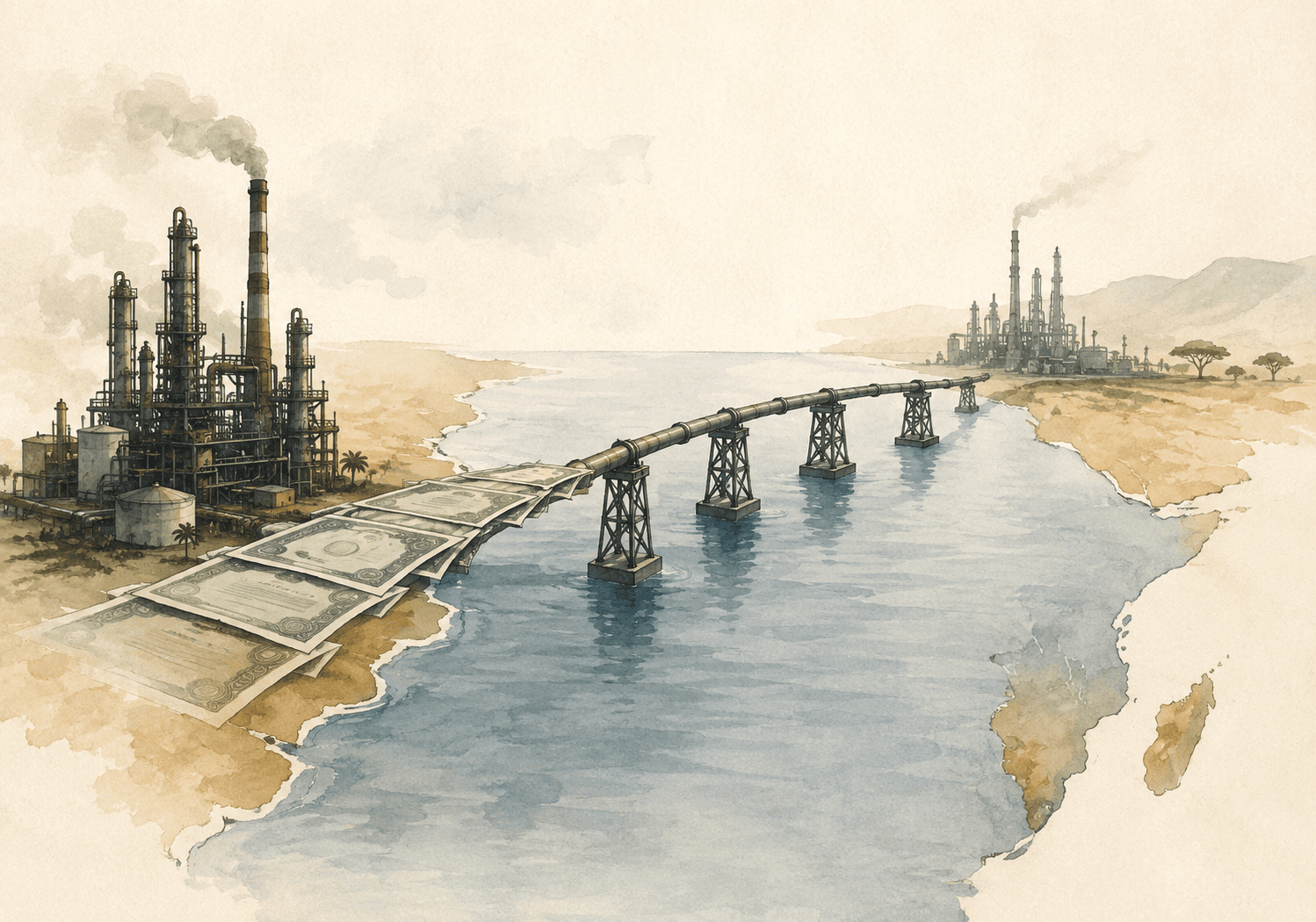
Dangote Group’s planned refinery IPO is less a conventional listing than a funding bridge for a larger industrial strategy: doubling Nigerian refining capacity while extending the model to Kenya. If successful, the plan would use public equity to finance a regional refining network aimed at reducing Africa’s reliance on imported fuels.

SoundHound AI completed its acquisition of LivePerson on September 4, combining voice and agentic AI with enterprise messaging infrastructure and appointing former LivePerson executive John Collins as CFO. The deal reflects a broader shift in customer-service AI from standalone tools toward unified platforms spanning voice, messaging, orchestration, data and enterprise accounts.
Executive chairman
A board leadership role that can preserve influence and continuity after a CEO steps down from day-to-day management.
On-device AI
Artificial intelligence processing that happens locally on a phone, computer or wearable rather than primarily in remote cloud data centers.
Installed base
The total population of active Apple devices and users that can be monetized through upgrades, services and subscriptions.
Custom silicon
Chips designed by Apple for its own products, giving the company more control over performance, power efficiency and AI capabilities.
The Motley Fool
Tim Cook Committed Apple to a $60 Billion Domestic Manufacturing Bet Just Weeks Before Handing Off the CEO Job. Here's What It Means for Apple Investors.
Comments