Uber to Buy ezCater for $2.3 Billion in Enterprise Food Push
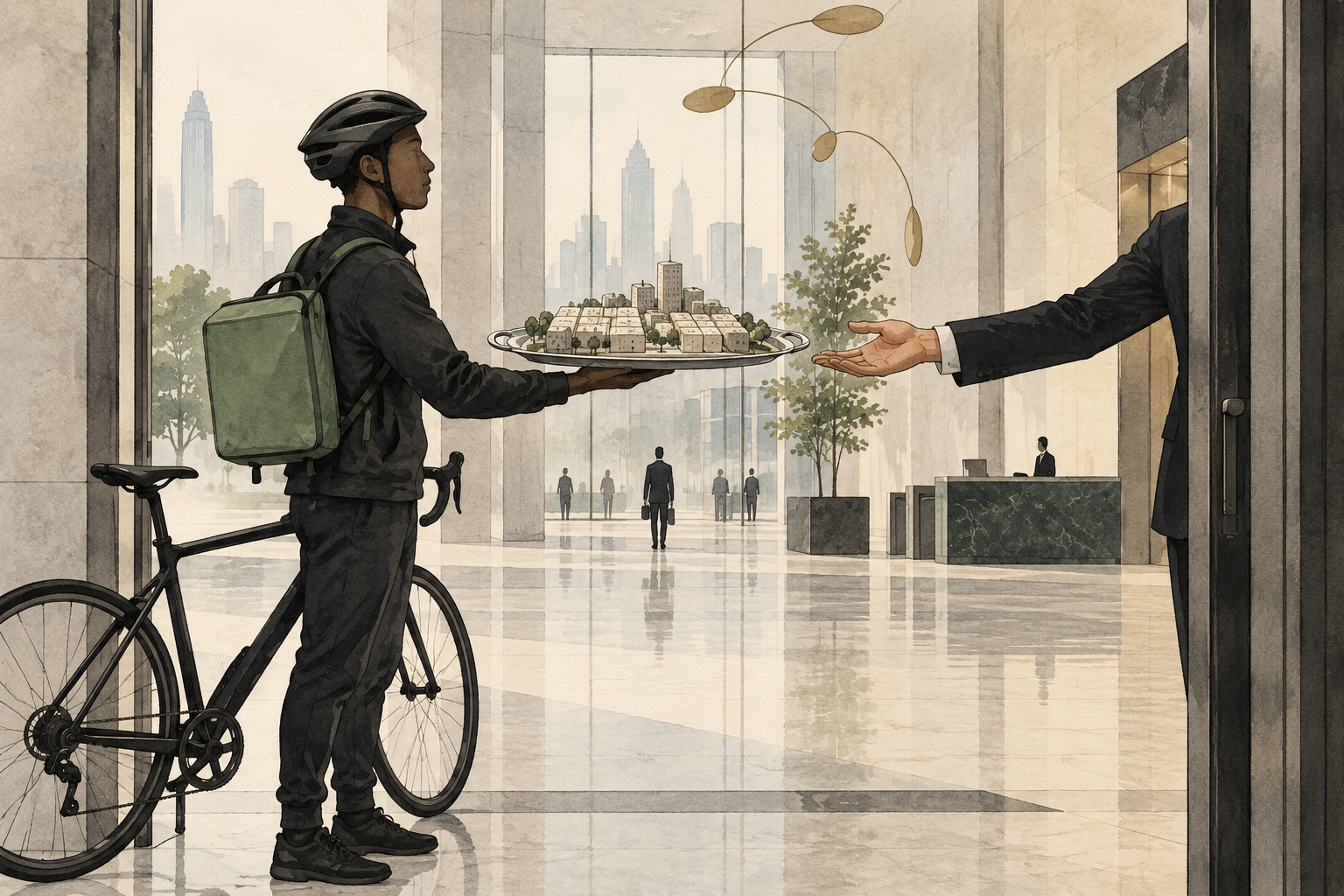
$2.3B Deal
Uber agreed to acquire ezCater in an all-cash transaction valued at $2.3 billion.
Bigger Orders
Uber said ezCater generated $2.5 billion in trailing gross bookings and average order values above $400.
Enterprise Push
The deal extends Uber Eats into workplace catering and strengthens Uber for Business relationships.
Uber said it agreed to buy ezCater for $2.3 billion in cash, bringing a major workplace catering platform into Uber Eats and deepening its push into recurring corporate food orders through Uber for Business.1
Announced October 6, the acquisition would move Uber’s food-delivery business further beyond household takeout and into enterprise services, including office lunches, employee meal programs, meeting catering and other scheduled orders that can be larger and more predictable than consumer delivery. Reuters also reported the all-cash transaction, framing it as part of Uber’s effort to expand corporate meals and narrow the gap with DoorDash in food delivery.3
EzCater connects companies with restaurants and catering providers for recurring staff meals, events and office food programs. Uber said the business generated $2.5 billion in trailing gross bookings, was profitable, and had average order values above $400 — economics that differ sharply from single-household restaurant delivery.1
The deal signals a strategic shift in how Uber is trying to grow Uber Eats. Rather than relying only on individual consumers ordering lunch or dinner on demand, Uber is buying into a business-to-business market where orders are often scheduled in advance, tied to company budgets and repeated across offices.
Uber said ezCater will complement Uber Eats and Uber for Business by adding catering capabilities for customers that already use Uber’s enterprise products.1 EzCater’s announcement emphasized its workplace-meals focus, including tools for recurring employee meals, restaurant access and corporate catering management.2
That matters for platform-economy watchers because the acquisition pushes Uber’s delivery model closer to an enterprise-services platform. Instead of matching one courier with one household order, Uber can target larger commercial orders, employee benefit programs and office attendance initiatives that may provide more stable demand.
Catering orders can be more complex than standard food delivery, but they also tend to be larger. FreightWaves noted the transaction’s emphasis on higher-value scheduled deliveries and average order values above $400, as Uber looks to use its existing network for more commercial delivery volume.8
Restaurant Dive reported that the acquisition could expand Uber Eats’ large-order business and give restaurants access to bigger catering orders, while also raising questions about integration and competitive positioning.5
For restaurants, workplace catering can mean larger baskets, planned production and repeat corporate customers. For Uber, the opportunity is demand that is less dependent on the daily volatility of consumer takeout habits.
The ezCater deal also makes Uber for Business a more central part of Uber’s food strategy. The enterprise unit already sells ride, meal and travel-management products to companies. Adding ezCater gives Uber a specialized workplace food platform that can be bundled into corporate accounts.
Bloomberg described the acquisition as an enterprise push that would help Uber Eats reach corporate clientele, including workplace and event catering customers.6 Legal adviser Covington & Burling, which said it advised Uber on the deal, also cited the transaction’s strategic rationale across Uber Eats, business-to-business catering and Uber for Business.10
The move follows a broader pattern among delivery platforms: expanding from consumer marketplaces into business services where customers may spend more, order repeatedly and value reliability over promotional discounts.
The acquisition comes as Uber and DoorDash continue to compete for restaurant delivery, grocery, retail and business customers. Reuters reported that analysts viewed the deal partly through that competitive lens, with Uber using ezCater to strengthen its position in corporate meals.3
DoorDash has also pursued workplace and group-ordering opportunities, making enterprise food a logical next battleground. In that context, ezCater gives Uber a scaled catering marketplace rather than forcing it to build a corporate catering network from scratch.
Workplace meal programs have become more relevant as employers try to shape office attendance and employee experience after the shift to hybrid work. EzCater released a same-day lunch report saying more than half of U.S. workers skip lunch at least once a week and highlighting employer-provided meals as a potential driver of workplace engagement and on-site attendance.11
Those findings align with the logic of the deal: if companies continue using meals as an employee benefit or office-return incentive, catering platforms can capture recurring budgeted spending. Uber is betting those corporate orders can make food delivery less purely consumer-driven.
Uber and ezCater did not frame the deal only as a delivery acquisition. They described it as a way to combine Uber’s marketplace, logistics and enterprise relationships with ezCater’s catering technology and restaurant network.12
Still, integration will matter. Catering requires reliability, order accuracy, advance coordination and restaurant readiness at a scale that differs from standard delivery. Restaurant Dive noted that the deal raises integration questions even as it expands Uber Eats’ access to large orders.5
If completed, the acquisition would mark one of Uber’s clearest moves to turn food delivery into a broader business-services layer — one where the customer is not just a person ordering dinner, but a company feeding teams on a recurring basis.

SAP’s planned acquisition of TechWolf shows how the company is shifting its AI strategy from general-purpose assistants toward enterprise systems grounded in proprietary business and workforce context. The deal would add skills intelligence, work data and AI models to SAP SuccessFactors and Joule.
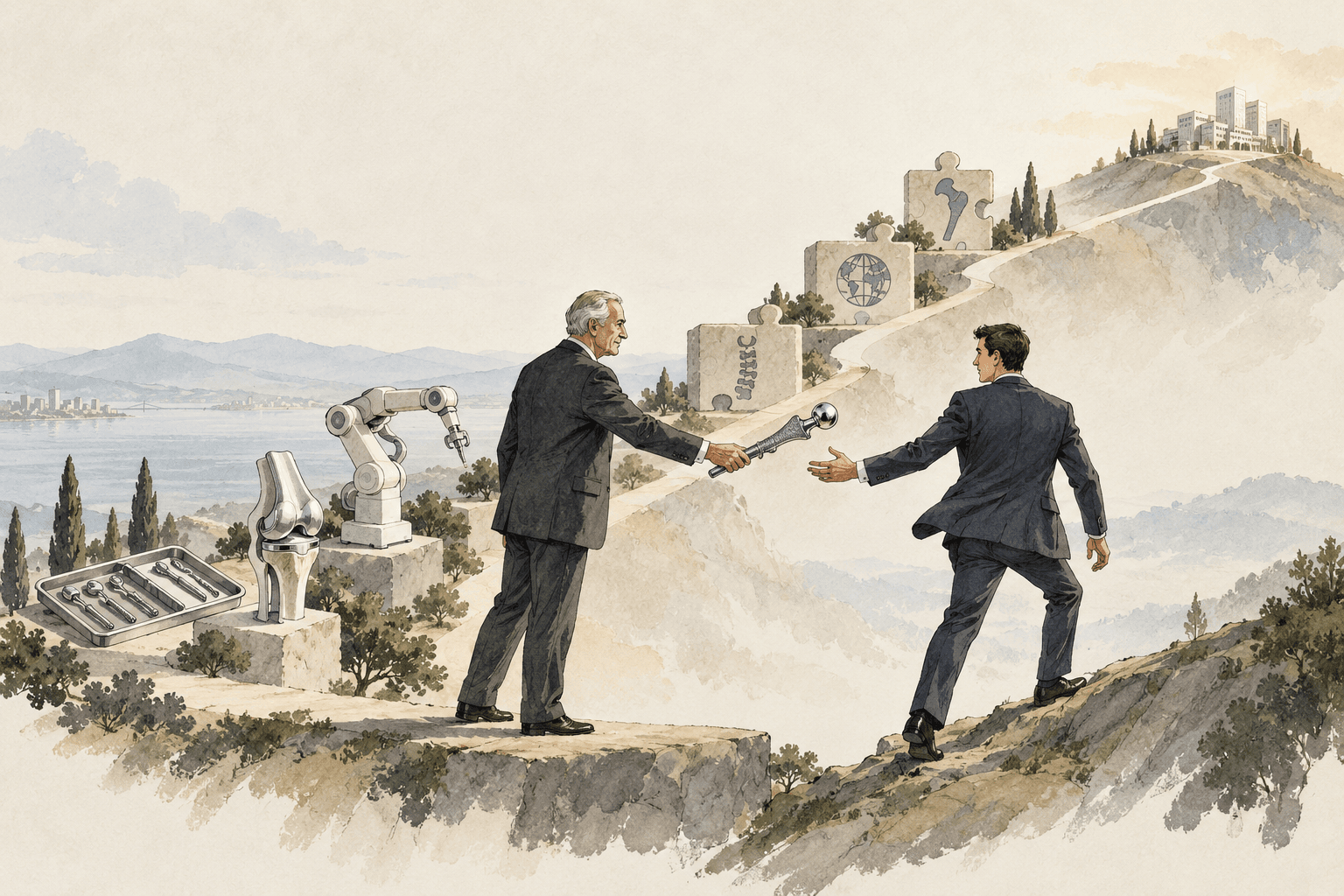
Stryker said Kevin Lobo will become executive chair on January 1, 2027, while President and COO Spencer Stiles takes over as CEO. The handoff signals continuity for one of medtech’s most acquisitive companies, but Stiles inherits pressure to keep growth moving after a long expansion in orthopedics, robotics and medical technology.

Informa’s £2.24 billion agreement to buy Clarion from Blackstone, paired with a plan to separate Taylor & Francis, recasts the group around higher-growth B2B live events. The transaction signals a sharper capital-allocation framework: build scale in exhibitions, and move slower-growth publishing into a structure better suited to its own market.

Paramount’s completed takeover of Warner Bros. Discovery creates a Hollywood and news giant called Skydance, led by David Ellison with Ynon Kreiz as co-CEO. The immediate challenge is integrating studios, streaming, CNN and CBS while satisfying regulators and insulating newsrooms from political pressure.
Gross bookings
The total dollar value of transactions on a platform before deductions such as refunds, incentives, taxes or payments to partners.
Uber for Business
Uber’s enterprise arm, which sells transportation, meal and travel-management products to companies.
Workplace catering
Scheduled food orders for offices, meetings, events or recurring employee meal programs, usually paid for or managed by an employer.
Average order value
The average dollar amount of each order, a key metric because larger orders can change delivery economics and restaurant margins.



Comments